
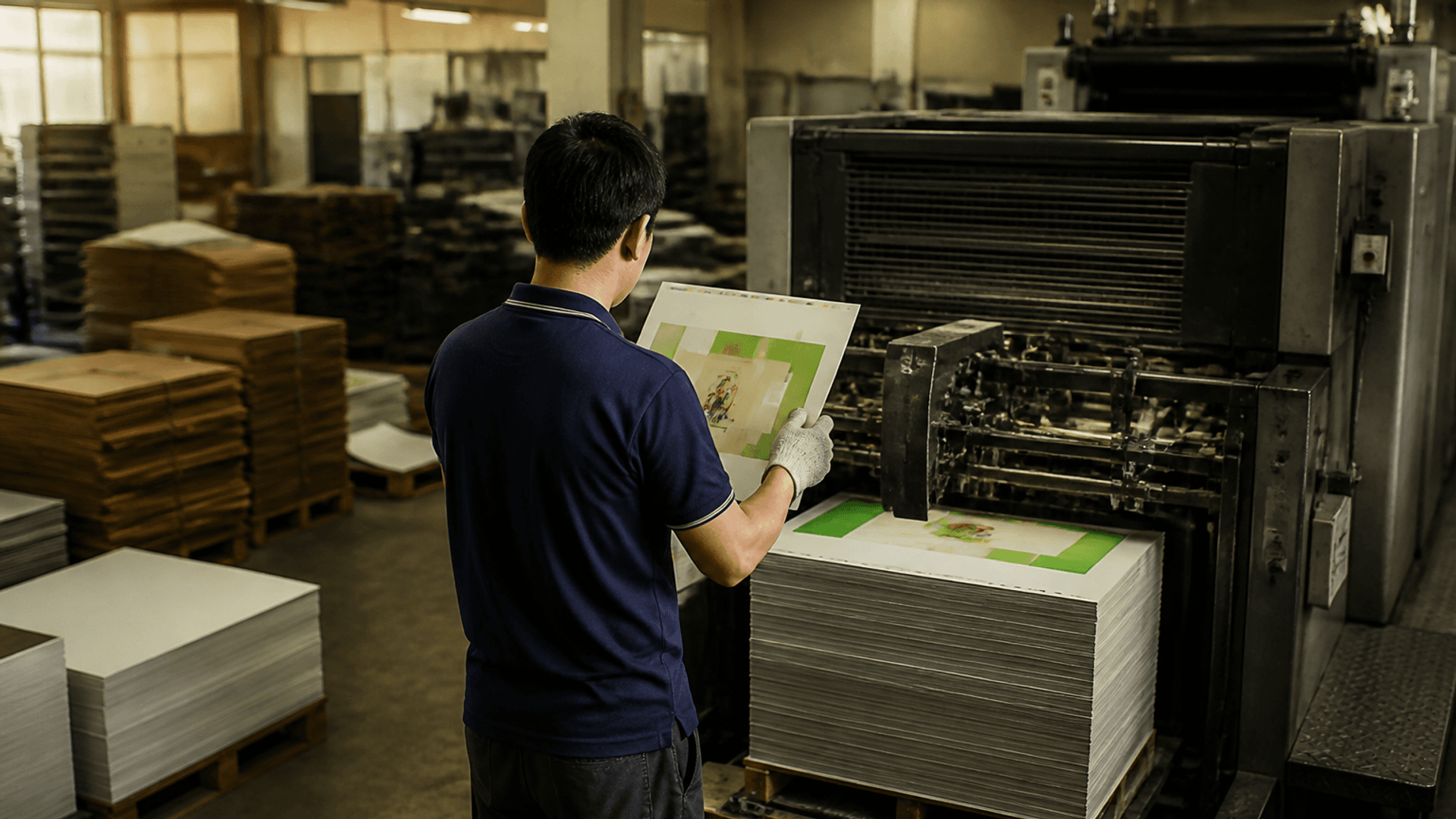
Made-in-Vietnam: Proving Substantial Transformation (2026)
What US Customs requires to accept packaging as Vietnam-origin — substantial transformation rule, audit-ready documentation, and transshipment red flags.
How do you prove your packaging is really made in Vietnam?
Section 301 tariffs apply to the country of origin, not the country of shipment. That means CBP's only protection against importers running Chinese goods through a Vietnamese warehouse to dodge the 25% tariff is the substantial transformation rule. Since 2023, CBP has prioritized enforcement on exactly this pattern — packaging, electronics, textiles — with retroactive duty assessments running back the full statute of limitations and civil penalties up to 4× the unpaid duty.
Several US importers learned this the hard way over the past two years. The pattern is consistent: a forwarder sets up a "Vietnam packaging supplier" that turns out to be a relabeling shed; the importer trusts the paperwork; CBP audits two years later and demands the back duty plus penalties. The importer eats the cost — not the supplier.
The substantial transformation rule, in plain English
The legal test under 19 CFR 102 and decades of CBP rulings is whether a manufacturing operation produces a new article of commerce with a name, character, or use distinct from the input materials. For paperboard packaging, that translates into a clear practical line.
Operations that DO count as substantial transformation in Vietnam:
- Paperboard sheets → printed and die-cut folding cartons
- Kraft liner + medium → fluted corrugated board → finished mailers
- Plain paperboard → laminated, foiled, and assembled rigid set-up boxes
- Plastic resin → blown or thermoformed plastic packaging components
Operations that DO NOT count as substantial transformation:
- Receiving finished boxes and applying a Vietnamese label or sticker
- Receiving finished boxes, breaking them down, and re-bundling
- Receiving paperboard sheets that were already printed in China and just doing the die-cut + glue step in Vietnam
- Receiving finished boxes and adding inserts, dividers, or accessories
The dividing line is whether the Vietnamese factory takes a recognizable input (paper, board, resin) and outputs a fundamentally different article (a printed, finished, ready-to-ship package). If the input was already a box and the output is also a box, you don't have substantial transformation regardless of what was done in between.
What origin documentation actually holds up
There's a hierarchy of documents in CBP's eyes — some are weakly probative, others are dispositive. Build your file with the strongest evidence first.
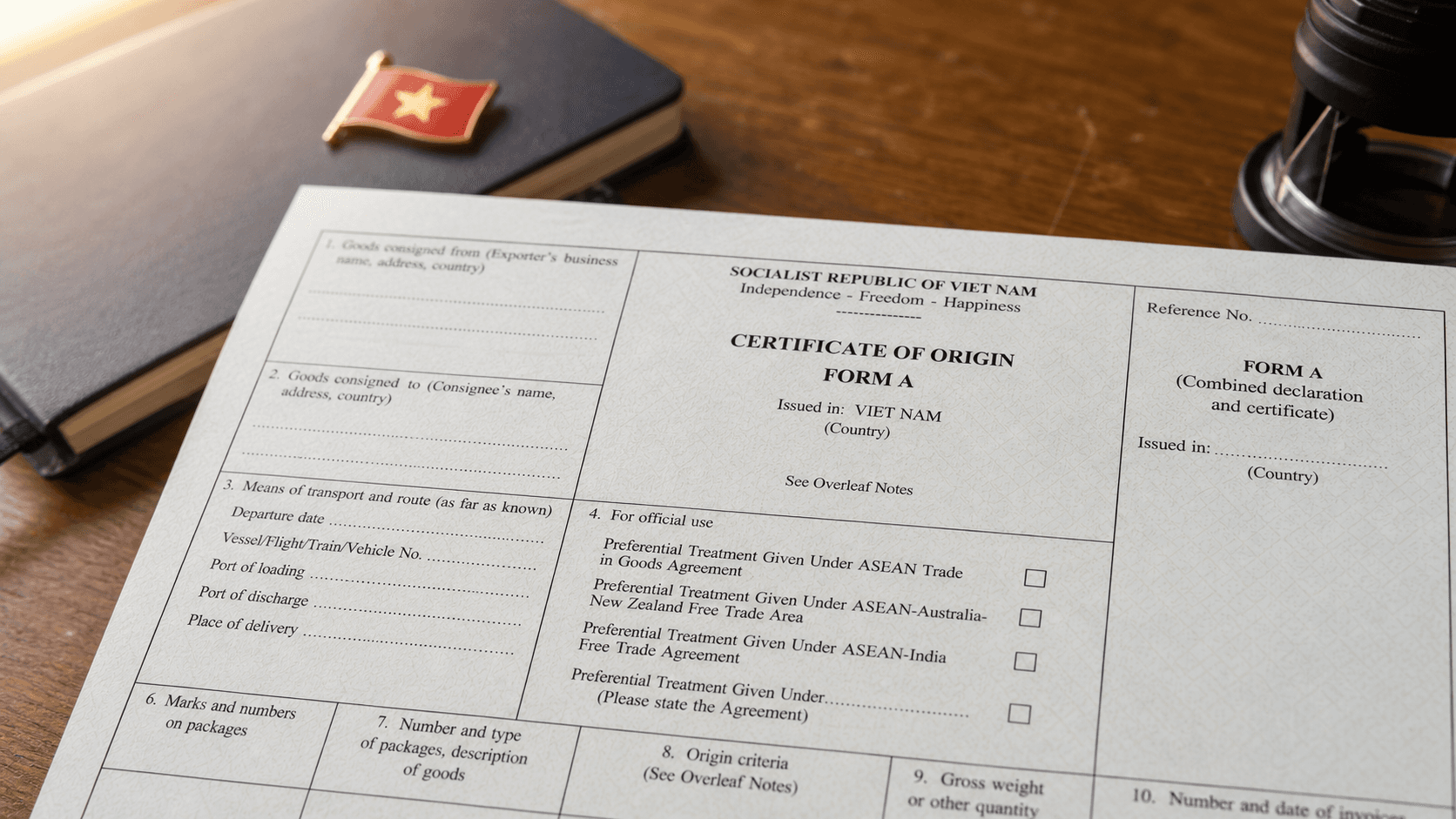
- Vietnamese Certificate of Origin (Form B for non-preferential trade with the US, issued by the Vietnam Chamber of Commerce and Industry — VCCI). This is the baseline document; assume CBP wants it on every entry.
- Manufacturer's affidavit naming the specific factory, listing the operations performed, and signed by an officer of the Vietnamese supplier. CBP gives this real weight when the operations described match what an actual paperboard converter does.
- Mill test reports / paper supplier invoices showing the substrate was sourced from a non-Chinese mill (Vietnamese, Indonesian, Korean) — or, if Chinese paper was used, evidence that the paper itself underwent substantial transformation in Vietnam (printing, die-cut, lamination, assembly).
- Production records — work orders, machine run logs, ISTA test certificates linking the factory to the specific shipment, dated within the production window.
- Photos and video of the production floor with timestamps and recognizable factory identifiers (signage, equipment serial numbers visible in frame). Optional but increasingly expected when a CBP audit gets serious.
Vietnam Xinyuanjia — where the substantial transformation happens
Our Vietnam operations entity. Paperboard converting, offset printing, finishing, ISTA testing — all in-country, all documented to CBP's evidentiary standard.
How to actually verify origin yourself
Procurement teams that want to do the diligence properly run this sequence — usually pre-onboarding, then again on a sample basis annually.
- Visit the factory in person at least once before the first PO. A two-hour walk-through tells you in 20 minutes whether real conversion is happening, or whether the place is a transshipment yard with finished cartons stacked on the dock.
- Walk the production line and watch operations occurring. Offset press running. Die-cut presses cycling. Glue stations active. Workers handling raw paperboard, not finished boxes.
- Ask to see the paper supplier invoices for the last 6 months. Cross-check the suppliers against known Vietnamese, Korean, Indonesian mills. A factory that can't or won't show you these is a red flag.
- Request the VCCI Form B for a recent shipment and verify it on the VCCI online registry (cosvietnam.gov.vn). VCCI numbers are issued sequentially; mismatches are easy to spot.
- Pull the entry summary (CBP Form 7501) from your broker for any past shipments and confirm the country of origin field reads "VN" with no flags or holds.
- On a sample basis, request mill test certificates traceable from the paper input through to the finished SKU. A real converter has these on file.
Red flags that suggest transshipment
- Factory address that resolves to a warehouse complex without obvious converting equipment visible on satellite imagery
- Vietnamese supplier was incorporated within the last 24 months and has only one or two named principals, both based in mainland China
- Quoted lead times that are suspiciously short for the SKU complexity (under 10 days for a printed folding carton from order to ship — that's faster than real production)
- Reluctance or inability to share paper supplier invoices, even under NDA
- Refusal to permit an in-person factory visit
- Pricing that is materially below what your existing Chinese supplier quotes — a 40%+ discount usually means there's no real Vietnamese conversion happening, just a relabel margin
What "Made in Vietnam" actually requires for a paperboard box
Concretely, for a folding carton or rigid gift box to qualify as Vietnam-origin under CBP's substantial transformation analysis, the following minimum operations must occur in Vietnam:
- Paperboard sheet handling — receiving, cutting to working size, conditioning
- Printing — offset, flexo, or digital, applied in-country (printed sheets imported from China and merely die-cut in Vietnam are NOT substantially transformed; this is the most common failure mode)
- Die-cutting — converting printed sheets into the carton blank
- Folding and gluing — converting flat blanks into finished, shippable boxes
- Quality control and packaging for export
If any one of those steps is being done in China and only the rest in Vietnam, you're in a gray zone — and CBP increasingly treats those gray zones as not transformed. The conservative read: all five operations should be Vietnamese to be safe.
How Section 301 actually works (and why this matters)
The full breakdown of Section 301 packaging tariffs, HTS codes, and exclusions — context for why origin verification is the highest-leverage compliance move a US buyer can make.
Frequently asked questions
Can I rely on the supplier's Certificate of Origin alone as proof?
Not for a serious audit. The COO is necessary but not sufficient — CBP treats it as one document in a larger evidentiary file. If the audit gets aggressive, the auditor will want to see the manufacturer's affidavit, paper supplier invoices, production records, and ideally site verification. Treat the COO as the cover page, not the whole answer.
What does CBP actually look at during a Section 301 origin audit?
In our customer experience, the typical CBP audit reviews: (1) entry summaries for the period under review, (2) the COO for each shipment, (3) the manufacturer's affidavit and supporting commercial records, (4) the paper input supply chain — invoices, shipping documents, mill certificates, and (5) any prior CBP rulings or protests on related SKUs. If any layer fails, they escalate to a site visit or a formal Request for Information.
If my supplier sources Chinese paperboard but does all the converting in Vietnam, is that Vietnam-origin?
Generally yes, provided the converting in Vietnam is genuinely substantial — printing, die-cutting, gluing, and finishing. Substantial transformation analysis looks at whether the finished article (a printed, glued, ready-to-ship box) has a different name, character, and use than the input (paperboard sheets). It does. But document the input chain carefully — CBP can and does scrutinize this scenario, and you want clean records showing where each step occurred.
What's the actual penalty if a transshipment claim turns out fraudulent?
Under 19 USC 1592, civil penalties for fraud can reach 4× the unpaid duty, plus the duty itself, plus interest. For negligence (the lower bar), penalties run up to 2× the unpaid duty. CBP can also seize the merchandise, deny future entries from that supplier, and refer cases to ICE for criminal investigation in egregious patterns. This is not a theoretical risk — there have been multi-million-dollar settlements in this category since 2023.
Keep reading
- Section 301 packaging tariffs by HTS code
- Vietnam vs China landed-cost worked example
- The full Vietnam packaging tariff-free buyer's guide
- Hai Duong Factory — Capacity and Capabilities
- Vietnam Xinyuanjia — our Vietnam operations
- Vietnam corrugated packaging manufacturing
- Cardboard trays & inserts
- Rigid box manufacturing in Vietnam