
Offset vs Flexo vs Digital Print: When Each Wins (2026)
A procurement comparison of offset, flexo, and digital print for packaging — which to use at which volume, the quality tradeoffs, and when each wins.
Offset, flexo, or digital — which print method should you choose?
On a finished box you can sometimes tell the print method by squinting at the dot pattern under a loupe. From across the room you usually can't. The real difference between offset, flexo, and digital isn't visible — it's structural: how plates are made, how ink is applied, what substrates are supported, what minimum economical run looks like. Procurement teams that pick by aesthetic preference often end up with the wrong method for their volume and complain about cost they can't fix without re-tooling.
Offset (lithography): the workhorse for retail packaging
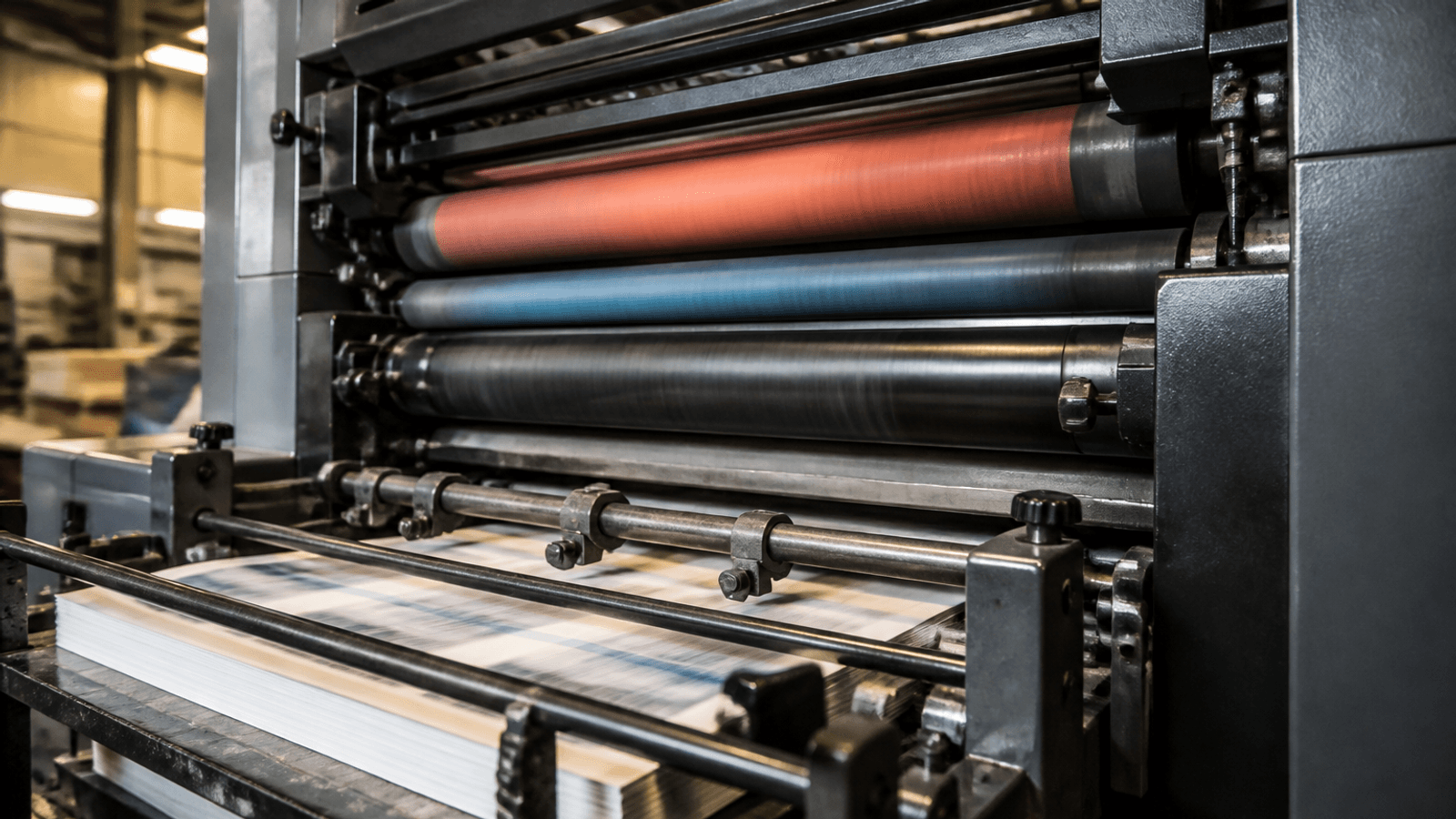
Offset works by transferring ink from an etched aluminum plate to a rubber blanket, then from the blanket onto the paperboard sheet. Each color (CMYK plus any spot colors) needs its own plate and its own press unit. The press carries the sheet through the units in sequence, building up the image.
Strengths: highest fidelity halftones, cleanest edges, widest color gamut (especially with spot colors and Pantone matching), supports specialty inks (metallics, varnishes), works on virtually any paperboard substrate from 200gsm coated to 600gsm rigid stock. The tooling cost is high — plates run $30–$60 per color — but per-impression cost is the lowest of the three methods above ~5,000 units.
Weaknesses: high makeready cost (plates, color matching, registration setup) means short runs are expensive — for 500 units the plate cost alone might double the per-unit price. Long lead times for plate production add 3–5 days to the schedule. Variable data is impossible (every sheet has the same plates).
Flexo: corrugated's natural fit
Flexo (flexography) uses flexible photopolymer plates and water-based or UV-cured inks transferred through anilox rollers. The plates are softer than offset's metal plates, which is why flexo works on textured or absorbent surfaces — corrugated kraft, label stock, recycled brown paper — that offset struggles with. Flexo presses are typically web-fed (continuous roll) rather than sheet-fed, making them well-suited to high-volume corrugated mailer and label production.
Strengths: best on corrugated and rough surfaces, runs at very high speed (1,000+ feet per minute on large web presses), low per-unit cost for runs above ~2,000 units, fast plate turnaround compared to offset. Great for shipping cartons, mailer boxes, kraft-paper retail bags.
Weaknesses: lower halftone resolution than offset (dot gain is more pronounced, so fine detail and photo-realistic halftones look softer), color gamut is narrower especially in the lighter tones, color-to-color registration is harder than on a sheet-fed offset press. Plate cost per color is similar to offset ($30–$50), so very short runs are uneconomic. For premium retail packaging where sharpness matters, flexo's softness is a visible compromise.
Digital: the short-run + variable-data option
Digital printing — primarily HP Indigo or Konica Minolta toner-based, plus inkjet from Canon ColorStream and Memjet — uses no plates. The press takes a digital file directly and prints it. Each impression can theoretically be different, which is the key technical capability flexo and offset can't match.
Strengths: no plate cost, so per-unit cost is constant from 1 unit to ~1,500 units. Variable data is supported (each carton can have a unique QR code, customer name, batch number, region-specific copy). Sample lead time is 2–4 days vs 7–10 for offset. Excellent for short-run retail launches, limited editions, regional pack variants, and any program where you'd need to plate-up many SKU variants.
Weaknesses: per-impression cost stays high — at 5,000 units, digital is typically 2–3× the cost of offset. Color gamut is narrower than offset for the lightest tones, and digital can struggle to reproduce certain Pantones (especially metallics, fluorescents). Substrate compatibility is improving but still narrower — most digital presses run uncoated and matte coated stocks well, gloss-coated less consistently. Hot foil and embossing are post-press steps and not integrated like they are in offset finishing.
Side-by-side: which to use when
| Criterion | Offset | Flexo | Digital |
|---|---|---|---|
| Best run size | 5,000+ | 2,000+ | 1–1,500 |
| Plate cost (per color) | $30–$60 | $30–$50 | none |
| Per-unit cost at 10K | lowest | low (corrugated) | highest |
| Color gamut | widest | narrower | narrower |
| Halftone fineness | best | softer | good |
| Substrate range | widest | rough/absorbent | smooth/coated mainly |
| Variable data | no | no | yes |
| Sample lead time | 7–10 days | 5–7 days | 2–4 days |
How to spot the difference (and when it matters)
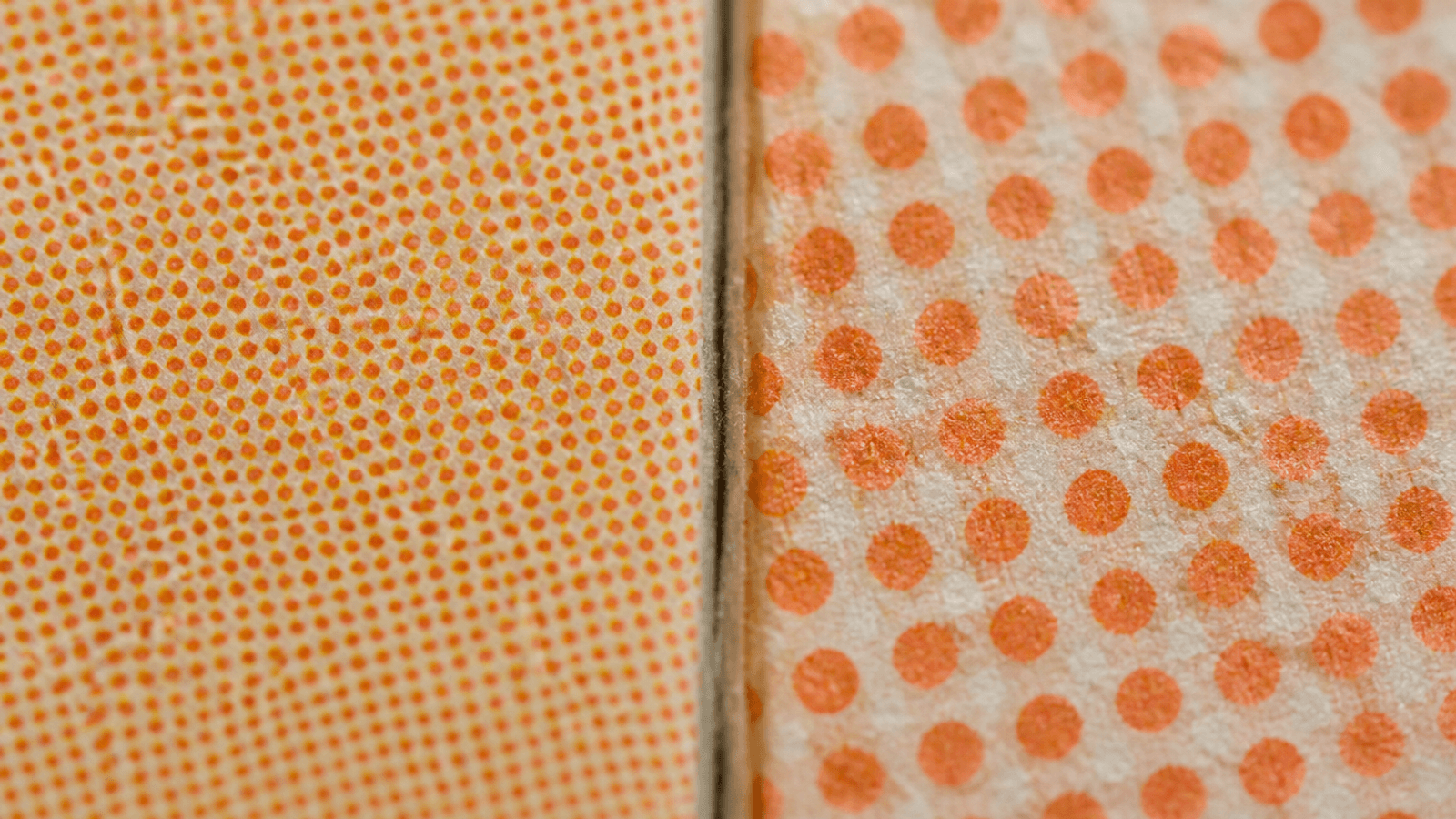
Under a loupe at 10× magnification, the three methods look distinctly different: offset shows tight, sharp-edged halftone dots; flexo shows slightly softer dots with mild dot gain at the edges; digital shows toner specks (in toner systems) or inkjet droplet patterns. Only buyers who use a loupe ever see this. The visible difference at normal viewing distance comes from cumulative cues: registration tightness, color saturation in shadows, sharpness of solid color edges, and finishing quality (varnish evenness, foil registration).
Where the difference matters in practice: photo-realistic imagery (offset wins decisively over flexo), tight Pantone matches (offset), variable data programs (digital only), and premium tactile finishes that integrate with print (offset's spot UV and metallic inks, possible on flexo but more limited).
How to write a print spec that gets the right method
- Specify the volume range honestly — under 1,500 force a digital quote, 2,000–5,000 take both offset and flexo quotes, 5,000+ default to offset (or flexo for corrugated).
- Specify Pantone references with their PMS numbers, and flag any that are critical brand colors (e.g., signature orange) where exact match is required. This forces converters to commit to G7 or GMI calibration.
- Specify the substrate by paper grade and weight, not just "white folding carton" — different mills produce different shades of white and different ink absorption.
- Specify finishing requirements — varnish, foil, embossing, debossing — and ask whether they're inline (offset/flexo) or post-press (often the case for digital).
- Request a press proof or hard contract proof before committing the production order. Soft proofs (PDF) are not enough for color-critical work.
Offset and digital are converging
Two trends to watch: HP Indigo's newer 7-color presses are closing the color-gamut gap with offset, making short-run digital genuinely competitive on quality up to 8,000 units. And mid-format inkjet presses (Heidelberg's Primefire, Landa S10) are pushing digital into the 10,000–20,000 unit run range with cost competitive with offset. For now (early 2026) the rules-of-thumb in this article hold. By 2028, digital's economical run size may be closer to 5,000 units.
Rigid gift boxes — picking the right closure
Closure choice (magnetic vs lift-off vs drawer) is paired with print method choice. Read the rigid box buyer's guide for the full structural picture.
Frequently asked questions
At what exact run size does digital lose to offset?
Crossover depends on color count and finishing. For 4-color CMYK with simple finishing, breakeven is typically around 3,500–5,000 units. For runs with multiple Pantone spot colors and finishing (foil, varnish), offset's per-unit cost drops faster, pulling breakeven down to around 2,500 units. For runs with variable data or many SKU variants (e.g., 50 different cartons at 200 each), digital wins decisively no matter the math because offset would require 50 plate sets.
Can I do hot foil stamping with digital print?
Yes, but as a post-press step. Digital presses themselves don't apply foil — foil stamping is a separate operation done on a stamping press after the digital print is complete. The result is technically identical (same foil, same heat, same pressure) but adds a separate handling step and a $200–$500 setup. For runs under ~1,000 units, this is fine. For larger runs, integrating foil into an offset finishing workflow is more efficient.
Does Vietnam have offset capacity that matches Chinese print quality?
For mid-tier and premium offset, yes — most established Vietnamese exporters run identical Heidelberg, Komori, or KBA presses. The quality ceiling is the same. Where Vietnam is still thinner is in the very top-end specialty effects (cold-foil inline, lenticular, certain spot UV finishes) — fewer Vietnamese factories have proven track records on these. For 90% of B2B retail packaging, Vietnamese offset output is indistinguishable from Chinese.
What's the smallest run that's economical for offset?
Below 1,500 units, offset rarely makes economic sense — plate cost ($30–$60 × 4–6 colors = $200–$400) plus makeready time means per-unit cost can be 2–3× what digital would be. Above 5,000 units, offset wins almost always. The 1,500–5,000 zone is where you should request both offset and digital quotes and compare. Most converters will be honest about this if asked directly.